

You bought the wearable. You wear it every night. You check your sleep score every morning. And then you do absolutely nothing differently.
Sound familiar?
I see this constantly with clients. They have a Whoop. They have an Oura Ring. Some have both. They can tell me their HRV, their REM percentage, their resting heart rate trend over 90 days. They are drowning in data. And their sleep is still bad. Their recovery is still poor. They still feel like they are dragging through their days.
The data is not the problem. The data is actually excellent. The problem is that nobody taught them what to do with it.
So let me do that. This is the translation guide your wearable company forgot to include.
First, Understand What These Devices Are Actually Measuring
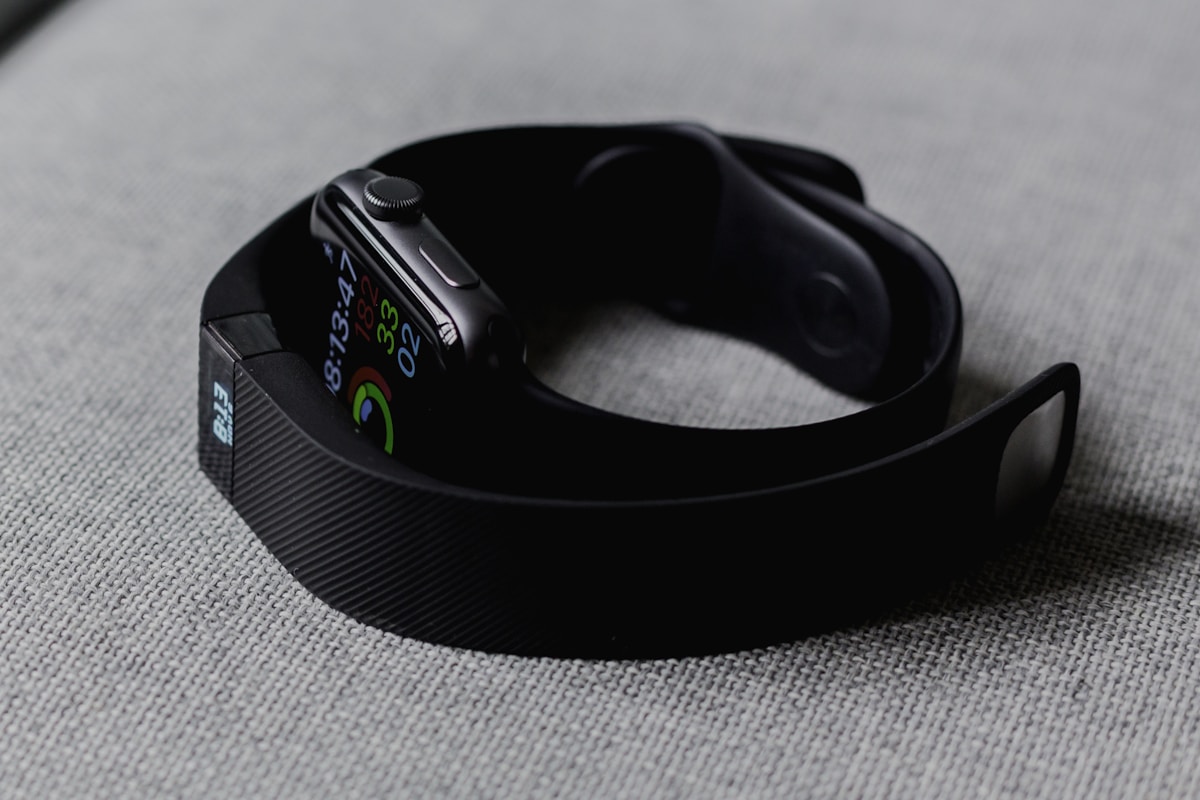
Devices like the Whoop and the Oura Ring measure your body through a combination of heart rate, heart rate variability, skin temperature, blood oxygen levels, and accelerometry. From those inputs, they generate estimates of your sleep stages, recovery status, and readiness.
The keyword is estimates. These are not medical-grade sleep labs. They are making educated inferences from peripheral signals, and they are remarkably good at it, but they are still inferences. The goal is not to optimize every single night's score. It is to identify patterns over time and use those patterns to make better decisions. One bad score means nothing. A consistent trend tells you something real.
The Metrics That Actually Matter and What They Mean
HRV: Heart Rate Variability
This is the single most important metric on your device. HRV measures the variation in time between heartbeats. More variation is better. High HRV means your autonomic nervous system is balanced and recovered. Low HRV means your nervous system is under load from training, stress, illness, or poor sleep.
What matters is your personal baseline, not a comparison to other people. Always compare to yourself. Trends over 7 to 14 days matter more than single-night numbers. If your HRV is declining week over week, something is accumulating stress that you are not recovering from. That is the signal to act on.
Resting Heart Rate
Measured while you sleep, resting heart rate is one of the cleanest signals your wearable collects. An elevated resting HR relative to your baseline, even by 3 to 5 beats per minute, is often the earliest detectable sign of overtraining, incoming illness, or significant sleep debt.
When resting HR goes up and HRV goes down at the same time, that is the double signal. Pull back on training intensity. Prioritize sleep. Your body is telling you something clearly.
Sleep Stages

Deep sleep (slow-wave): The most physically restorative stage. Growth hormone is released here. Muscle protein synthesis peaks here. Tissue repair happens here. In adults over 35, deep sleep declines most significantly with age. It is also the stage most disrupted by alcohol, late eating, high cortisol, and inconsistent sleep timing. If your wearable shows consistently low deep sleep, that is a concrete problem for your physical recovery, body composition, and hormonal function.
REM sleep: Where cognitive consolidation, emotional regulation, and memory processing happen. Consistently low REM shows up as mental fog, reduced creativity, emotional reactivity, and slower learning. Alcohol is one of the biggest suppressors of REM, even when consumed hours before bed.
General targets: deep sleep should account for roughly 15 to 20 percent of total sleep time. REM should account for 20 to 25 percent.
Recovery and Readiness Score
Both Whoop and Oura synthesize multiple metrics into a single daily score. Think of this as a suggested training intensity guide, not a strict rule. The real value is using the readiness score alongside how you actually feel. When the two align consistently, your device is well-calibrated to your body.
The Six Most Common Patterns and What to Do About Them
High total sleep time, low deep sleep. You are spending enough time in bed but not reaching the restorative stages. Common causes: evening alcohol, room temperature too warm, high cortisol, inconsistent sleep timing, screens before bed.
Low HRV trending down week over week despite consistent training. You are overreaching. Add a full recovery day, reduce intensity for one to two weeks, audit your nutrition and sleep quality. More training right now makes this worse.
Elevated resting heart rate after heavy training. Normal if it resolves in 24 to 48 hours. Chronic elevation after every session means your recovery is insufficient. Look at sleep, protein, hydration, and training volume.
Low REM consistently. First question: alcohol within three hours of sleep? That alone accounts for the majority of low REM scores I see. Second: are you sleeping on a consistent schedule? REM happens predominantly in the second half of the night. Inconsistent timing cuts into it.
Good scores all week, crash on weekends. Social jet lag. You are shifting your circadian rhythm on weekends. Narrow the gap between weekday and weekend sleep timing to within one hour.
Numbers look fine but you feel terrible. Trust how you feel. Wearables are tools, not authorities. Look at stress load, nutrition, and whether your baseline has shifted.
How to Use Your Wearable Data to Train Smarter
Green readiness score: Train as planned. Your body is ready. If you have a hard session scheduled, do it.
Yellow readiness score: Modify intensity. Keep the session but drop the top end. Accumulate work, do not set PRs.
Red readiness score: Active recovery only. Walk, mobility work, easy movement. One hard session on a red day can set your recovery back three to five days.
The biggest mistake: treating readiness scores as optional context. People check their score, see red, train hard anyway, then wonder why they keep getting injured or stalling. The data is telling you something. Develop the discipline to act on it.
What Your Wearable Cannot Tell You
Your wearable does not measure stress from relationships, financial pressure, or emotional load. All of those suppress HRV just as surely as a hard training session. It does not measure nutrition quality or protein adequacy. And it does not account for acute life disruptions. Use the data over weeks and months, not days.
The Upgrade Most People Do Not Think About
The device shows you the problem. It does not solve it.
Most people who see consistently low deep sleep scores fix the behavioral side and get partial improvement. What they often miss is the biological side. Natural melatonin production declines after 35. Progesterone, which directly promotes deep sleep in women, decreases. Stress hormones are chronically elevated in most high-functioning adults.
Behavioral changes create the conditions for better sleep. The right supplement stack supports the biology underneath it. That is the combination that actually moves the needle on deep sleep scores.
FAQ
Are Whoop and Oura accurate? Accurate enough to identify meaningful trends. Not clinical-grade sleep labs. Use them for directional insight over time.
Which is better, Whoop or Oura Ring? Whoop is stronger for training load tracking. Oura is slightly stronger for sleep staging and readiness. The best one is the one you will actually wear consistently.
What HRV is good? Yours, at its personal high. Compare to your own 30 to 60-day baseline, not other people.
Should I train on a red recovery day? Active recovery only. Do not add training stress on a day your body is already signaling it cannot handle more.
Why is my deep sleep always low? Most common causes: evening alcohol, room too warm, high cortisol, inconsistent sleep timing, late eating, screens before bed, and declining natural melatonin with age.
If your wearable is consistently showing you low deep sleep, the honest answer is something in your biology or behavior is preventing you from getting there. Vybrant Sleep was formulated specifically to support deep slow-wave sleep using SOMATO Phyto-Melatonin, Tart Cherry Extract, L-Theanine, and Passion Flower. The goal is not just to help you fall asleep. It is to help your body reach and stay in the stages your wearable is already telling you matter most. Try it risk-free with our 30-day money-back guarantee.
About Joshua Haag
Joshua Haag is a master trainer, certified nutritionist, and founder of Heroic Performance and Vybrant. With over 20 years in the health and wellness space, Josh is the coach people find when surgery and PT have not solved the problem. He specializes in spine and shoulder rehab, corrective exercise, and functional movement, and brings a uniquely broad background to every client: classically trained chef, certified nutritionist, former professional athlete, and returning lecturer at Perform Better. Based in Los Angeles, he offers in-home personal training through Heroic Performance and created Vybrant, a clean supplement and lifestyle brand built around sleep, recovery, and longevity.

