

I have trained primarily women for most of my career. And the conversation I keep having, over and over, with women in their late 30s and 40s, goes something like this:
"I am doing everything right. I am eating clean. I am working out. I am not losing weight. My sleep is terrible. I feel like a completely different person in my own body. What is wrong with me?"
Nothing is wrong with you. Your hormones are shifting. And nobody updated your training program.
That is the actual problem.
Perimenopause is one of the most significant physiological transitions a woman's body goes through, and most training programs, diets, and wellness advice treat it like a footnote. It is not a footnote. It is a completely different hormonal environment that requires a completely different approach. And once you understand what is actually happening, everything starts to make sense.
What Perimenopause Actually Is

Perimenopause is the transition phase leading up to menopause, and it can start anywhere from the mid-30s to the mid-40s. It is not a single moment. It is a years-long process during which estrogen and progesterone levels become increasingly erratic and unpredictable before eventually declining.
And here is what makes it so confusing: it does not look the same in every woman, and it does not follow a neat timeline. Some women feel it acutely at 37. Others sail through their 40s and only notice real changes closer to 50. The hormonal variability is wide, and the symptoms reflect that variability.
What is happening underneath the hood is significant. Estrogen, which plays a role in bone density, muscle function, insulin sensitivity, sleep quality, mood regulation, and fat distribution, starts swinging unpredictably before it trends downward. Progesterone, which promotes calm, deep sleep, and nervous system balance, often starts declining first. Testosterone, yes women have it and need it for muscle, energy, and drive, also decreases.
When those three are fluctuating simultaneously, the downstream effects show up everywhere. That is why perimenopause does not feel like one symptom. It feels like ten.
Why Your Old Training Program Stopped Working
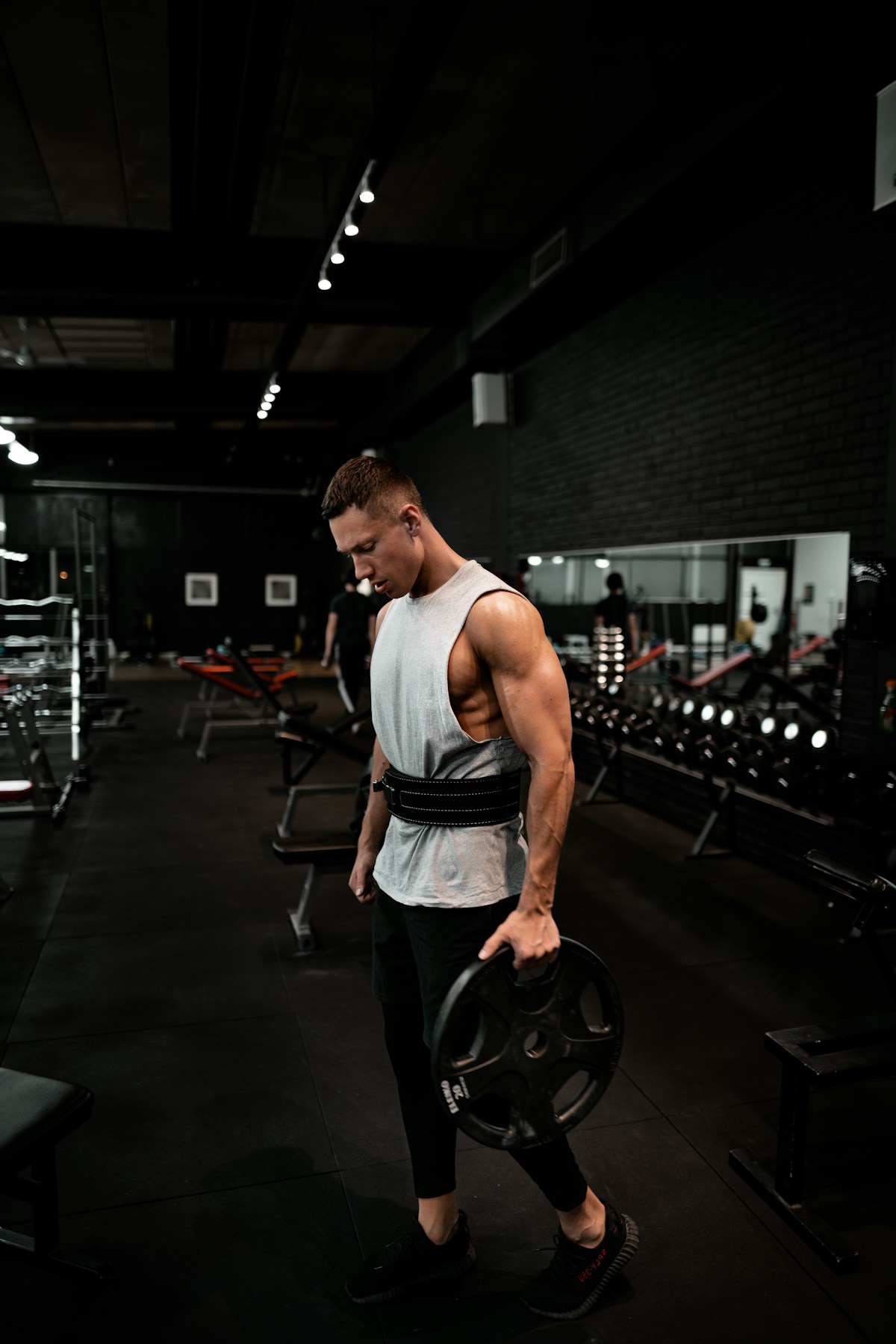
Here is what I see constantly: a woman who has been dedicated to her fitness routine for years suddenly finds that the same program that kept her lean, energized, and feeling strong has stopped producing results. She assumes she needs to work harder. So she does more. More cardio. More classes. More restriction. Less results. More frustration.
This is one of the most common and most damaging mistakes I see in perimenopausal women. And it is not their fault. It is a training program problem.
Cortisol sensitivity increases. High-intensity training that used to feel energizing now leaves you more depleted and takes longer to recover from. This is real. It is not in your head.
Recovery slows down. What used to take 24 hours to recover from now takes 48 or 72. Pushing through that without adequate recovery is not toughness. It is accumulating damage.
Muscle becomes harder to build and easier to lose. The old approach of moderate cardio with light weights is simply not enough anymore.
Sleep becomes more fragile. As progesterone drops, sleep becomes lighter, more disrupted, and less restorative. Poor sleep elevates cortisol, which makes recovery harder, which disrupts sleep further. A harder workout schedule only makes it worse.
What Actually Works During Perimenopause

This is not about doing less. It is about doing the right things.
Shift Your Foundation to Strength Training
Progressive resistance training is the non-negotiable. Not light weights and high reps. Real, challenging strength training that builds and maintains muscle. Muscle is your metabolic engine. It drives resting calorie burn, supports bone density, improves insulin sensitivity, and buffers the hormonal chaos of this transition. Compound movements, squats, deadlifts, rows, presses, lunges, three to four days per week with progressive overload.
Pull Back on Chronic High-Intensity Cardio
Daily boot camps and back-to-back HIIT sessions drive cortisol significantly. In a body already more cortisol-sensitive, that chronic stimulus actively worsens the hormonal picture. More belly fat, not less. More fatigue. More disrupted sleep. Recalibrate to one or two high-intensity sessions per week. Make the rest low-intensity walking, cycling, and easy movement.
Eat More Protein Than You Think You Need
Target 0.7 to 1.0 grams per pound of body weight daily. Minimum 35 grams per meal. Every meal built around a real protein anchor first.
Stop Under-Eating
Chronic calorie restriction in a perimenopausal body accelerates muscle loss, worsens hormonal symptoms, increases cortisol, and tanks energy. Your body is not being stubborn. It is being protective. Give it enough fuel to function.
Treat Sleep Like the Training Variable It Is
Consistent sleep and wake times. A real wind-down routine. A cool, dark room. No evening alcohol. And sometimes a well-formulated sleep supplement that supports the deep sleep stages where hormonal recovery actually happens.
Manage Stress Intentionally
Cortisol makes every perimenopausal symptom worse. Intentional recovery, walking, breathwork, honest rest, and boundaries around what you take on is not weakness. That is hormone management.
What I Tell Every Client Going Through This
You are not broken. Your body is in a transition and it is asking for a different kind of support than it needed before. The women who navigate perimenopause the best are not the ones who white-knuckled it with harder workouts and stricter diets. They are the ones who got informed, adjusted their approach, started lifting seriously, cleaned up their sleep, hit their protein, and gave their nervous system the recovery it was asking for.
Those women feel strong. They feel like themselves again. That is the goal. Not surviving perimenopause. Thriving through it.
FAQ
When does perimenopause typically start? For many women, hormonal shifts begin in the mid to late 30s, though the most noticeable symptoms often appear in the early to mid 40s.
Is it normal to gain weight during perimenopause even when nothing has changed? Yes. Hormonal shifts change fat distribution, reduce muscle-building efficiency, and alter insulin sensitivity.
Should I stop HIIT training completely? No. One to two high-intensity sessions per week alongside strength training is appropriate. Daily HIIT is where the cortisol problem compounds.
Can strength training really make a difference during perimenopause? Absolutely. Research consistently shows it supports bone density, muscle mass, insulin sensitivity, mood, and body composition.
Does sleep really affect hormonal symptoms that much? More than almost anything else. Sleep is when progesterone does its most calming work and when cortisol resets.
Sleep is where your hormonal recovery happens. Declining progesterone during perimenopause directly disrupts your ability to reach the deep, restorative sleep stages your body relies on. Vybrant Sleep was formulated with Passion Flower, clinically studied for sleep quality in women, alongside natural melatonin, L-Theanine, and Tart Cherry Extract. Try it risk-free with our 30-day money-back guarantee.
About Joshua Haag
Joshua Haag is a master trainer, certified nutritionist, and founder of Heroic Performance and Vybrant. With over 20 years in the health and wellness space, Josh is the coach people find when surgery and PT have not solved the problem. He specializes in spine and shoulder rehab, corrective exercise, and functional movement, and brings a uniquely broad background to every client: classically trained chef, certified nutritionist, former professional athlete, and returning lecturer at Perform Better. Based in Los Angeles, he offers in-home personal training through Heroic Performance and created Vybrant, a clean supplement and lifestyle brand built around sleep, recovery, and longevity.

