

You think of muscle as something you build for looks or strength. It is actually one of the most important organs in your body. And after 35, it starts working against you if you ignore it.
I want to reframe something for you that I think changes everything. Muscle is not just tissue. It is not a vanity project. It is not something you build when you are young and maintain out of habit. Muscle is an endocrine organ. It secretes hormones. It regulates metabolism. It controls blood sugar. It protects your joints. And it directly influences how fast or slow you age at the cellular level.
Most people lose muscle every year after 30 without even noticing it. The loss is quiet. It does not announce itself. And it accelerates if you are not training and eating specifically to stop it. By the time the downstream effects show up, which they always do, you are dealing with a problem that has been building for years.
This is the conversation I think every adult over 35 needs to have. Not about aesthetics. Not about six packs. About the one tissue that determines how you move, feel, and age for the next 30 years.
The Problem Most People Miss Entirely

Here is what is actually happening to your body right now if you are over 35 and not actively fighting it.
Sarcopenia, the age-related loss of skeletal muscle, begins in your early 30s. It starts slowly, roughly 3 to 5 percent of muscle mass per decade in the early years. After 50 it can accelerate to 1 to 2 percent per year without intervention. By 70, many sedentary adults have lost 30 to 40 percent of their peak muscle mass.
That is not a minor inconvenience. That is a fundamentally different body with fundamentally different health outcomes.
But here is the part most people miss: the consequences of muscle loss are not primarily about appearance. They are about the downstream systems that muscle controls. And once you understand those systems, the urgency of protecting this tissue becomes obvious.
Self-Assessment: Where Are You Right Now?
Before I explain the mechanisms, I want you to honestly answer these questions. They are the same ones I use with new clients to understand what is actually happening under the surface.
- Have you gained body fat in the last few years without dramatically changing your diet?
- Is your energy lower in the afternoon than it was five years ago?
- Do you recover more slowly from training sessions or physical activity than you used to?
- Do your joints feel less stable or more achy than they did in your late 20s?
- Has your strength plateaued or declined even though you still train?
- Do you feel like your body does not respond to exercise the way it once did?
If you answered yes to three or more of those, muscle loss is almost certainly part of what is driving it. Not all of it. But more than you probably realize.
What Muscle Actually Does in Your Body
This is the education piece that changes how people think about this. Muscle is not passive tissue that sits there looking good. It is one of the most metabolically active and hormonally influential organs in your entire body.
Muscle as a Metabolic Engine
Skeletal muscle is the largest glucose disposal site in the body. When you eat carbohydrates, your muscles are supposed to absorb and store the majority of that glucose as glycogen. When muscle mass is low, that capacity shrinks. Glucose stays in the bloodstream longer. Insulin has to work harder. Over time this drives insulin resistance, which is the primary mechanism behind type 2 diabetes, metabolic syndrome, and a cascade of inflammatory downstream effects.
This is why the correlation between low muscle mass and type 2 diabetes is so strong, and why building muscle is one of the most powerful interventions for metabolic health available to anyone at any age.
Muscle as an Endocrine Organ
During exercise, muscle tissue secretes compounds called myokines. These are essentially hormones produced by working muscle that communicate with other organs throughout the body. They reduce inflammation. They support brain health and cognitive function. They improve fat metabolism. They regulate immune function.
One of the most studied myokines is irisin, which is released during resistance exercise and has been shown to improve insulin sensitivity, reduce fat storage, and support brain-derived neurotrophic factor, which is the protein responsible for neuron growth and cognitive resilience. There is also IL-6, which in the context of muscle contraction has anti-inflammatory effects entirely different from the chronic inflammation associated with disease.
When you lose muscle, you lose the myokine signaling that comes with it. And that signaling is doing protective work throughout your body every time you train.
Muscle and Hormonal Health
The relationship between muscle and testosterone is bidirectional. Low testosterone accelerates muscle loss. But muscle loss also worsens the hormonal environment that supports testosterone production. The two systems drive each other in both directions.
Muscle tissue also plays a role in estrogen metabolism, which matters significantly for women navigating perimenopause and menopause. Adequate muscle mass helps buffer some of the metabolic effects of declining estrogen, including shifts in fat distribution, insulin sensitivity, and bone density.
Muscle and Joint Protection
This is the one clients feel most directly. Muscle is the primary shock absorber for every joint in your body. The knee is protected by the quadriceps, hamstrings, and glutes. The spine is protected by the deep core, spinal extensors, and hip stabilizers. The shoulder is protected by the rotator cuff and scapular stabilizers.
When the musculature around a joint weakens, the joint itself absorbs forces it was never designed to handle alone. Cartilage wears unevenly. Tendons and ligaments take more load. Pain becomes the signal that the system has been under-supported for too long.
Most of the chronic joint pain I see in clients over 40 is not primarily a joint problem. It is a muscle problem that has been misattributed to the joint for years.
Why It Gets Harder to Fight After 35
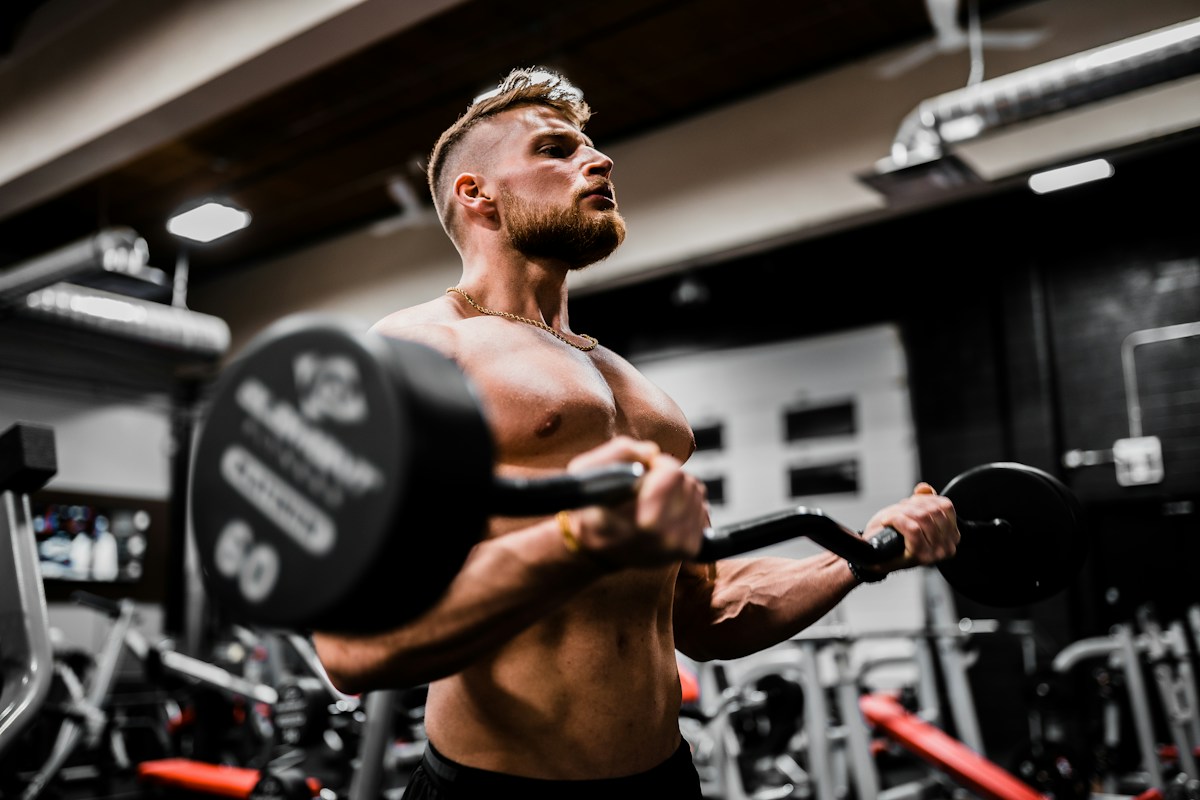
Understanding why this becomes harder after 35 is not about accepting defeat. It is about understanding the environment so you can train and eat intelligently within it. These are the four primary forces working against muscle after 35.
Anabolic resistance. Your muscles become less responsive to protein after 35. A younger person might trigger meaningful muscle protein synthesis from 20 grams of protein at a meal. An adult over 40 often needs 35 to 40 grams to get the same anabolic response. The mechanism still works. The threshold is just higher. This is why protein targets for adults over 35 are meaningfully higher than general population recommendations.
Declining testosterone and growth hormone. Both decline gradually after 30. Testosterone at roughly 1 percent per year. Growth hormone, which is primarily secreted during deep sleep, also decreases with age and with declining sleep quality. Both are essential to muscle protein synthesis and recovery. As they decline, the same training stimulus produces less adaptation than it once did.
Elevated cortisol. Cortisol is catabolic. In the presence of chronic stress, which defines most adults over 35 navigating careers, families, and financial pressure simultaneously, baseline cortisol stays elevated. Elevated cortisol directly suppresses testosterone, accelerates muscle protein breakdown, and impairs the sleep quality that would otherwise counteract both effects.
Reduced sleep quality. Deep sleep is when growth hormone is released in its largest daily pulse. It is when muscle protein synthesis peaks. It is when the nervous system encodes the adaptations from training. As natural sleep architecture shifts with age, and as lifestyle factors fragment sleep further, the recovery window that makes training productive narrows significantly.
None of these are excuses. They are variables. And every one of them is addressable with the right approach.
The Solution: What Actually Works After 35
Here is the framework I use with every client navigating this transition. It is not complicated. But every piece of it matters, and most people are missing at least one.
Progressive Resistance Training: The Non-Negotiable
Nothing replaces this. Not walking. Not yoga. Not cycling. Resistance training is the primary and specific stimulus that signals your body to maintain and build skeletal muscle. Without it, the body has no reason to invest metabolic resources in preserving tissue it is not being asked to use.
Three to four sessions per week. Compound movements built around squat patterns, hinge patterns, horizontal and vertical pressing, horizontal and vertical pulling, and loaded carries. Progressive overload over time, meaning the weight, the reps, or the difficulty needs to increase across weeks and months. That is the mechanism. Consistency at a challenging effort over years is what produces the long-term outcomes the research attributes to resistance training.
Protein: More Than You Think You Need
Target 0.7 to 1.0 grams of protein per pound of body weight daily. For a 170-pound person, that is 119 to 170 grams per day, every day, not just training days. Minimum 35 to 40 grams per meal to actually trigger muscle protein synthesis in the presence of anabolic resistance.
This is the single most common nutritional gap I see in adults over 35 who are training consistently but not progressing. They are training correctly and eating correctly for someone 15 years younger. The protein target needs to match the body they actually have now.
Sleep: Where the Adaptation Happens
Training creates the stimulus. Sleep is where the adaptation is built. Growth hormone. Testosterone. Muscle protein synthesis. Nervous system recovery. All of it happens primarily during deep, restorative sleep. Shortchange this window and you are training hard and collecting very little of the reward.
Seven to nine hours. Consistent sleep and wake times. A wind-down routine that supports the nervous system transition out of the stress response. A cool, dark sleep environment. And sometimes, a well-formulated sleep supplement that supports the deep sleep stages where recovery actually happens.
Cortisol Management
The adults I have watched respond best to training after 35 are not the ones grinding the hardest. They are the ones managing their recovery the most intelligently. Daily walking. Breathwork. Actual rest days. Honest limits around work, social obligations, and the things that keep the nervous system in fight-or-flight when it needs to be in recovery mode.
This is not soft advice. This is endocrinology. The hormonal environment you create every day through lifestyle choices determines how much of your training you actually keep.
The Tool and the Hack
The tool: Body composition tracking. Not the scale. DEXA, InBody, or hydrostatic weighing to actually see what is happening to your lean mass over time. The scale lies. It does not distinguish between muscle and fat. Body composition gives you the actual picture. Track it every 8 to 12 weeks while making meaningful training and nutrition changes. This is the feedback loop that makes everything else more intelligent.
The hack: Protein distribution, not just protein total. Most people, even those hitting their daily protein target, consume the majority of it in one or two meals. Research shows that distributing protein across three to four meals with a minimum of 35 grams each produces significantly better muscle protein synthesis throughout the day than the same total amount eaten unevenly. Spreading it out is free, it requires no extra food, and it meaningfully improves how much of that protein actually goes toward maintaining muscle tissue.
The Long View
Everything I have just described, the training, the protein, the sleep, the recovery, it all points toward the same underlying truth. Muscle is the most modifiable longevity variable available to you. More modifiable than genetics. More actionable than most pharmaceutical interventions. And the window to build and protect it is open right now.
The people who are going to be genuinely capable, energetic, and independent at 65 and 75 are not going to be the ones who got lucky with genetics. They are going to be the ones who understood what muscle actually does in the body, took it seriously at 38 or 42 or 47, and built the habits that compound over decades.
This is not about chasing a bigger physique. It is about protecting the one tissue that determines how you move, feel, and age for the next 30 years.
Start now. The compounding has already begun, in one direction or the other. You get to choose which one.
FAQ
When does muscle loss actually begin? The process begins gradually in the early 30s and accelerates meaningfully after 50 without specific intervention. But the lifestyle habits that drive or slow it are established well before the effects become visible.
Can you rebuild lost muscle after 40? Yes. The research is unambiguous on this. Resistance training produces significant muscle gain in adults in their 40s, 50s, and beyond. The process is slower and requires more precise nutrition and recovery than at 25, but the adaptation is real and meaningful.
Is cardio hurting my muscle? Excessive cardio without adequate protein and recovery can accelerate muscle loss. Moderate, strategically programmed cardio combined with resistance training does not. The balance matters.
How important is sleep for muscle maintenance? Critical. Growth hormone, testosterone, and IGF-1, the three primary hormones driving muscle protein synthesis, are all primarily produced or regulated during sleep. Chronically poor sleep is one of the most direct accelerants of muscle loss and one of the most overlooked.
Muscle is built during training. But it is built during sleep. The deep slow-wave sleep stages where growth hormone pulses, protein synthesis peaks, and hormonal recalibration happens are where every training session either pays off or does not. If your sleep is shallow, fragmented, or insufficient, you are leaving most of the adaptation on the table. Vybrant Sleep was built specifically to support the deep, restorative sleep stages where this work happens. Try it risk-free with our 30-day money-back guarantee.
Join the Free Longevity Academy
About Joshua Haag
Joshua Haag is a master trainer, certified nutritionist, and founder of Heroic Performance and Vybrant. With over 20 years in the health and wellness space, Josh is the coach people find when surgery and PT have not solved the problem. He specializes in spine and shoulder rehab, corrective exercise, and functional movement, and brings a uniquely broad background to every client: classically trained chef, certified nutritionist, former professional athlete, and returning lecturer at Perform Better. Based in Los Angeles, he offers in-home personal training through Heroic Performance and created Vybrant, a clean supplement and lifestyle brand built around sleep, recovery, and longevity.

