

You're not trying to live forever. You're trying to feel like yourself at 65. That's a different goal, and it has a completely different set of answers.
The question "how do I live longer" gets searched millions of times a month. But the people searching it aren't chasing immortality. They're 38, or 47, or 55, and they're watching their parents decline, watching their own energy slip, watching the gap widen between how they feel and how they want to feel. They want to know if there's something they can actually do about it.
There is. And the research in 2026 is clearer than it has ever been about what works and what doesn't.
This isn't a biohacking post. You don't need a $500 supplement stack, a cold plunge in your backyard, or a glucose monitor on your arm. What you need is a clear picture of the six things that the strongest human evidence says actually move the needle on how long you live well. Not how long you just exist, but how long you function, feel sharp, stay strong, and actually enjoy the body you're living in.
Let's go through it systematically.
The science, simplified
Healthspan vs. Lifespan: The distinction that changes everything
Lifespan is how many years you live. Healthspan is how many of those years you live well. Modern medicine got very good at extending lifespan. The gap between how long people live and how long they live in good health has widened for decades.
Everything in this post is aimed at healthspan. Living longer is a side effect of living better. The goal is to compress the period of decline at the end, not just push the end date back.
Pillar 1: Muscle Is Your Longevity Organ
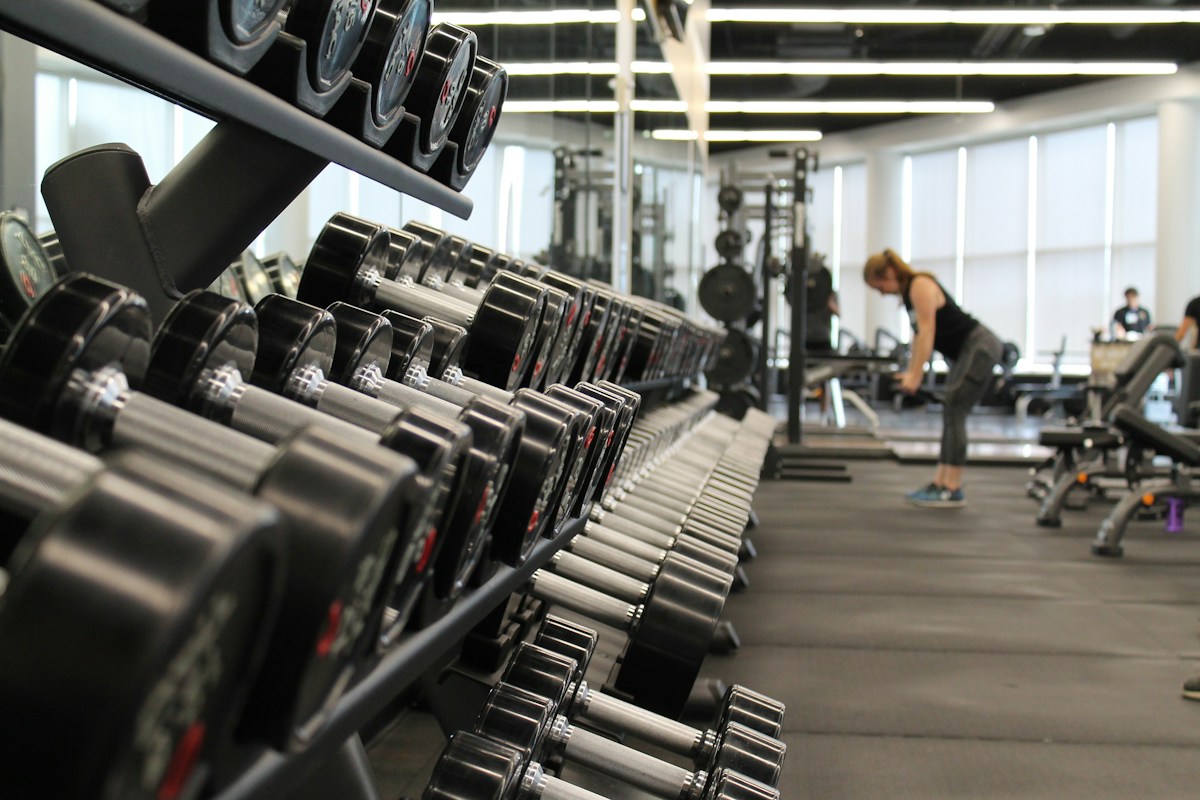
This is the one most people get wrong. They think longevity is a cardio problem. It's not. It's a muscle problem.
A landmark study in the American Journal of Medicine followed 3,659 older adults for more than a decade. The finding was direct: higher muscle mass index was associated with significantly lower all-cause mortality, independent of BMI or cardiovascular risk factors. What predicted survival wasn't how much you weighed. It was how much of that weight was muscle.
A 2025 dose-response meta-analysis of over 130,000 middle-aged and older adults confirmed the relationship. People classified with low lean mass faced 30 percent higher mortality risk. Each additional kilogram of lean mass was associated with roughly 1 percent lower death risk, with the greatest benefit coming from escaping the low muscle range.
But here's what the 2025 Mayo Clinic research added: muscle power, which is force times velocity, outperforms muscle strength alone as a predictor of mortality in middle-aged and older adults. It's not just about how much you can lift. It's about how fast and how functionally you can move. Power declines faster than strength with age. Training for it specifically matters.
Why does muscle protect your life? A 2026 review in iScience summarized skeletal muscle as a vital metabolic organ whose dysfunction connects to metabolic syndrome, cardiovascular disease, type 2 diabetes, and reduced healthspan. Muscle stores glucose, produces anti-inflammatory proteins called myokines, regulates insulin sensitivity, and communicates with virtually every organ system in your body. When you lose muscle, you don't just get weaker. You lose your primary defense against the chronic diseases most likely to kill you early.
What this means practically: Resistance training two to three times per week is not optional after 35. It's medical. Aim for 35 to 40 grams of protein per meal to trigger muscle protein synthesis (the threshold rises with age). And include power-based movements, things that require speed and explosiveness, not just slow, heavy lifts.
Pillar 2: Sleep Is Your Biological Age Control

You can do everything else right and undo most of it with bad sleep. That's not a metaphor. That's what the 2026 research actually shows.
A landmark multi-omics study published in Nature in August 2026 analyzed biological aging clocks across hundreds of thousands of participants. It confirmed a clear relationship: both too little and too much sleep accelerate aging across multiple organ systems. The sweet spot is 6.4 to 7.8 hours of consistent, quality sleep. Consistently below 6 hours and your cells age measurably faster.
The mechanism isn't vague. Chronic sleep deprivation raises cortisol and disrupts circadian rhythms that normally regulate inflammation, while also impairing mitochondrial repair processes like mitophagy. Over time, this shows up as measurable DNA methylation changes that epigenetic clocks interpret as accelerated aging.
Translation: poor sleep doesn't just make you tired. It makes you biologically older, faster.
The 2026 multi-omics research identified the key mechanisms: impaired glymphatic clearance (deep sleep is when the brain clears amyloid-beta and other waste products), chronic low-grade inflammation, hormonal dysregulation including elevated cortisol and reduced growth hormone, and epigenetic changes that influence DNA methylation patterns related to aging.
The circadian clock regulates not just sleep timing but also coordinates metabolic, hormonal, and immune function across a 24-hour cycle. Circadian misalignment from irregular sleep schedules accelerates epigenetic aging independent of sleep duration. It's not just about hours. Consistency of timing matters just as much.
What this means practically: Protect your sleep window like a training session. Same bedtime and wake time daily, including weekends. Cool, dark room. No screens 60 minutes before bed. Deep sleep quality, not just total hours, is where the longevity benefit lives. If your deep sleep is fragmented, you're collecting none of the hormonal or cellular repair that makes the other five pillars work.
Pillar 3: Zone 2 Cardio Builds the Engine Everything Else Runs On

Cardiorespiratory fitness, measured as VO2 max, is one of the most powerful predictors of longevity available. Not cholesterol. Not blood pressure. Not BMI. Fitness. And the dose-response relationship is steep: going from the lowest fitness category to the moderate category cuts all-cause mortality risk by more than any single drug in existence.
Zone 2 cardio, the intensity where you can hold a conversation but it's slightly uncomfortable, is how you build this base. It's the training zone that drives mitochondrial density, improves metabolic flexibility, and builds aerobic capacity without the recovery cost of higher intensities. It's also the zone most adults never actually train in, because they either go too easy (a casual walk) or too hard (intervals).
The mitochondrial angle is where this intersects most directly with longevity. Your mitochondria are the energy factories inside every cell. Mitochondrial dysfunction is one of the primary hallmarks of aging. It drives energy decline, metabolic disease, and cellular deterioration. Zone 2 cardio is the most powerful stimulus known to promote mitochondrial biogenesis, the creation of new, healthy mitochondria. You're not just getting fitter. You're reversing one of the core cellular processes of aging.
What this means practically: Three to four sessions of 30 to 45 minutes per week at a pace where you can speak in sentences. If you can't speak in sentences, you're going too hard. If you could give a speech, you're going too easy. Build it slowly. The benefits compound over months, not days.
Pillar 4: Protein and Fiber, Together, Drive Metabolic Health
Metabolic health is the term that's gone mainstream in 2026, and it's worth understanding what it actually means. It focuses on how the body properly digests and absorbs nutrients, with biomarkers like glucose regulation, muscle retention indicators, and circadian rhythm metrics contributing to a better understanding of long-term aging risk.
Only about 12 percent of American adults are metabolically healthy by clinical criteria. That means 88 percent have at least one marker out of range. Fasting glucose, blood pressure, waist circumference, triglycerides, or HDL cholesterol. Metabolic dysfunction doesn't just raise disease risk. It accelerates biological aging directly.
The two dietary factors with the strongest evidence for metabolic health across the adult lifespan are protein and fiber. They work differently and they work together.
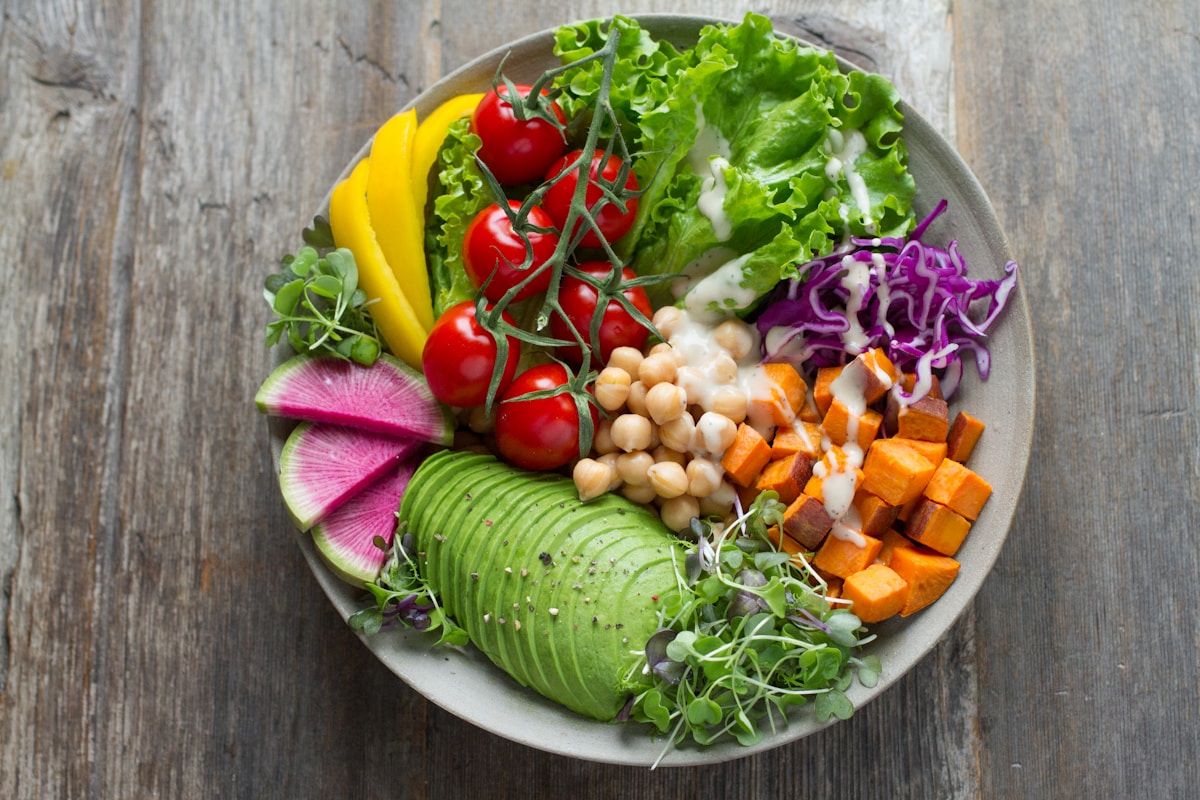
Protein preserves muscle mass during aging, triggers muscle protein synthesis, regulates appetite hormones, and supports immune function. After 35, the target is 0.7 to 1.0 grams per pound of body weight daily, distributed across three to four meals. Under-eating protein is the most common nutritional error I see in adults who are otherwise doing everything right.
Fiber feeds the gut microbiome, produces short-chain fatty acids that regulate inflammation, stabilizes blood sugar, improves insulin sensitivity, and supports hormone metabolism. Higher fiber intake consistently improves metabolic markers, satiety, and microbial diversity while lowering risks for colon cancer and type 2 diabetes. The target is 30 to 38 grams daily from varied whole food sources. Most adults are getting 10 to 15 grams.
The gut-longevity connection deserves its own moment here. Gut microbiome diversity declines with age. A less diverse microbiome produces fewer anti-inflammatory compounds, communicates less effectively with the brain and endocrine system, and is less resilient under stress. Consistent, varied fiber intake from whole foods is the single most evidence-backed strategy for maintaining and restoring microbiome diversity across the adult lifespan.
What this means practically: Anchor every meal with protein. Add fiber-dense foods, legumes, seeds, vegetables, fruit with the skin on, at every opportunity. Don't count every gram. Just make it the default rather than the exception.
Pillar 5: Stress Management Is Inflammation Management
Chronic stress is not a mental health issue. It's a biological aging accelerant. The mechanism is direct and well-documented.
When you're chronically stressed, cortisol stays elevated beyond its normal morning peak. Chronic elevation of cortisol impairs the negative feedback control of the HPA axis, leading to sustained stress hormone exposure that accelerates muscle loss, bone resorption, immune suppression, and metabolic dysfunction. These aren't hypothetical downstream effects. They're measurable changes in body composition, immune markers, and metabolic function that show up in people under chronic stress within months.
The inflammation connection is where it intersects most directly with longevity. Researchers call it inflammaging, a state of low-grade, chronic inflammation that is the underlying driver of virtually every major age-related disease. Cardiovascular disease, insulin resistance, cognitive decline, joint deterioration, and accelerated muscle loss all share chronic inflammation as a root mechanism. Chronic stress drives inflammaging faster than almost any other lifestyle factor.
The practical interventions that work are also the simplest. Slow, extended-exhale breathing (the 4-7-8 protocol, box breathing) directly activates the parasympathetic nervous system and lowers cortisol acutely. Consistent sleep (back to Pillar 2) is the most powerful cortisol regulator available. Zone 2 cardio improves HPA axis regulation over time. Social connection, which is underrated in every longevity conversation, is independently associated with lower inflammatory markers and longer life in virtually every large population study ever done on the subject.
What this means practically: You don't need a meditation app or a therapist (though both can help). You need consistent sleep, consistent movement, and some kind of daily practice that signals to your nervous system that it's safe to downregulate. Five minutes of extended-exhale breathing before bed is enough to start.
Pillar 6: Know Your Numbers
The biggest longevity shift in 2026 is that people want to know what's breaking down before it breaks. That's a fundamentally different conversation from the one that dominated healthcare for decades.
The biomarkers worth tracking aren't exotic. They're the ones your doctor can order at your next annual physical. What matters is knowing your baseline, tracking the trend over time, and understanding what each number actually tells you about your biological age and disease risk.
The core longevity panel:
Fasting glucose and HbA1c. These tell you how well your body is managing blood sugar. Insulin resistance is the upstream driver of metabolic syndrome, type 2 diabetes, cardiovascular disease, and cognitive decline. It develops quietly over years before any symptoms appear. Knowing your numbers early is what lets you reverse it before it becomes a diagnosis.
Grip strength. This sounds too simple to matter. It isn't. Grip strength has emerged as one of the most reliable biomarkers of biological age and longevity, more predictive than blood pressure for cardiovascular disease, disability, and death. It reflects overall neuromuscular function, muscle quality, and physiological reserve. A simple handheld dynamometer costs under $30.
VO2 max estimate. Cardiorespiratory fitness is the strongest predictor of all-cause mortality across the lifespan. You don't need a lab test. Many fitness watches estimate it with reasonable accuracy, and the trend over time matters more than the absolute number.
Fasting insulin. Standard blood panels often include glucose but not insulin. Fasting insulin tells you much earlier whether insulin resistance is developing. Normal fasting glucose with high fasting insulin is a warning sign that standard screening misses.
Inflammatory markers: hsCRP and IL-6. High-sensitivity CRP gives you a direct readout of systemic inflammation. If it's chronically elevated, something in your lifestyle is driving inflammaging, and it's worth finding what.
What this means practically: Get a full metabolic panel annually. Track grip strength quarterly. Know your VO2 max trend. These five markers together give you more actionable information about your biological age and longevity trajectory than any consumer longevity test currently on the market.
How These Six Pillars Connect
This is the part that matters most, and the part most longevity content leaves out.
These aren't six separate interventions. They're one system. Muscle drives metabolism and insulin sensitivity. Sleep drives muscle protein synthesis, cortisol regulation, and immune function. Zone 2 cardio drives mitochondrial health and VO2 max. Protein and fiber drive gut health, metabolic stability, and muscle preservation. Stress management drives cortisol, sleep quality, and inflammation. Knowing your numbers tells you which lever to pull first.
When one pillar weakens, it pulls the others down. Poor sleep raises cortisol, which drives muscle loss, which worsens insulin sensitivity, which disrupts sleep. It's a loop. And it's the loop that explains why adults who feel fine at 38 often feel 20 years older by 50, not because of any single thing they did or didn't do, but because the system started losing coherence and nobody noticed until it was already advanced.
The adults who age well are the ones who treat these six pillars as non-negotiable, not because they're afraid of dying, but because they've decided that feeling capable and clear and strong for the next 40 years is worth protecting.
Where Sleep Fits in the Longevity Stack
Every one of the other five pillars delivers its payoff during sleep. Growth hormone for muscle repair peaks in the first few hours of deep slow-wave sleep. The glymphatic system clears the brain's metabolic waste only during sleep. Inflammatory cytokines produced by the day's stress are reset. Cortisol returns to its natural baseline. Insulin sensitivity is restored for the following day.
If your sleep is shallow, fragmented, or consistently short, you are running the five other pillars at a fraction of their potential. You're doing the training, eating the protein, managing the stress, and then failing to collect the return on that investment every single night.
Vybrant Sleep was built specifically to support the deep slow-wave stages where all of this recovery happens. The formula includes SOMATO Phyto-Melatonin, Tart Cherry Extract, L-Theanine, and Passion Flower working together to deepen sleep quality, not just initiate it. It's not a sedative. It's support for the biological processes your body is already trying to run every night.
Try Vybrant Sleep risk-free with our 30-day money-back guarantee.
FAQ
What is the difference between lifespan and healthspan? Lifespan is how many years you live. Healthspan is how many of those years you spend in good health, free from chronic disease and significant disability. Modern longevity science is focused on closing the gap between the two, compressing the period of decline rather than just pushing the end date back.
What does the research say is the single most important thing for longevity? No single factor dominates across all studies, but cardiorespiratory fitness and muscle mass consistently rank highest across the largest, longest-running studies. Sleep quality and metabolic health are close behind. The strongest evidence points to the interaction between all of them rather than any single intervention.
Do supplements help with longevity? Some have emerging evidence: NAD+ precursors, taurine, and certain targeted compounds. But none of them overcome a broken foundation. The supplements that matter most for most people are the basics: adequate protein, vitamin D, magnesium, and omega-3s, all of which support the six pillars directly. Start there before anything exotic.
What is biological age and how do I find out mine? Biological age is how old your cells and tissues are functioning relative to your chronological age. Epigenetic clocks like GrimAge and DunedinPACE are now commercially available and can measure it from a saliva or blood sample. More practically, your VO2 max estimate, grip strength, and fasting metabolic markers give you a functional picture of your biological age without any special testing.
How much exercise do I actually need for longevity? The evidence points to three to four sessions of Zone 2 cardio (30 to 45 minutes each) plus two to three sessions of resistance training per week as the minimum effective dose. More is not always better, particularly with high-intensity training, where recovery and sleep quality become limiting factors. Consistency over years matters more than any single week.
Is it too late to start at 45 or 50? No. The studies consistently show meaningful benefits from starting resistance training, improving sleep, and increasing aerobic activity at any age. Some of the most dramatic biological improvements in muscle mass, insulin sensitivity, and inflammatory markers are seen in adults who start in their 40s and 50s, precisely because there's more dysfunction to reverse and the body responds quickly to the stimulus.
About Joshua Haag
Joshua Haag is a master trainer, certified nutritionist, and founder of Heroic Performance and Vybrant. With over 20 years in the health and wellness space, Josh is the coach people find when surgery and PT have not solved the problem. He specializes in spine and shoulder rehab, corrective exercise, and functional movement, and brings a uniquely broad background to every client: classically trained chef, certified nutritionist, former professional athlete, and returning lecturer at Perform Better. Based in Los Angeles, he offers in-home personal training through Heroic Performance and created Vybrant, a clean supplement and lifestyle brand built around sleep, recovery, and longevity.

